Thermal · Anomalies · GIS
Drone thermal inspection
Drone thermography finds hidden faults: hot cells, strings that are not producing, faulty connections. Each anomaly is classified by severity and located on the plan of the installation.
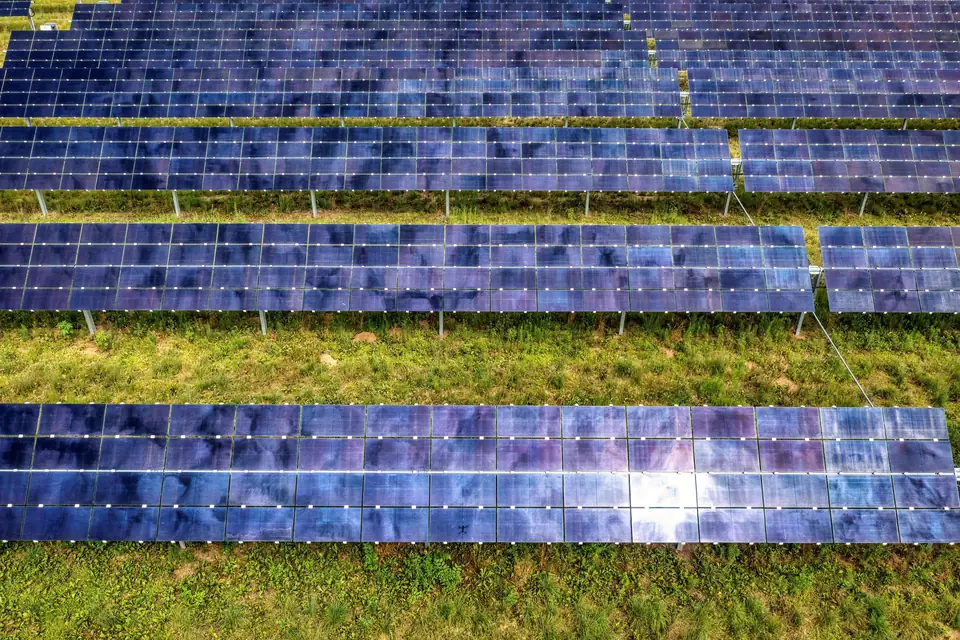
What is drone thermography?
Drone thermography captures thermal images from the air with a camera that records the temperature of each surface.
Temperature differences reveal faults invisible to the naked eye: hot cells, strings that are not producing, faulty connections, heat losses.
From the drone, the installation is inspected without walking it and without interrupting production. The area covered per day depends on the terrain, the sensor, the resolution required, the airspace and the planning; we set it in the flight plan for each project.
We combine each thermal image with the visible image and the RTK position to locate every anomaly on the plan.
Solar panel inspection with drones: how we do it
We fly with sufficient irradiance and the plant in production, around the middle of the day, so that anomalies are visible.
Altitude and overlap are adjusted to obtain the thermal resolution needed for each module.
We capture thermal and visible imagery at the same time with the DJI Zenmuse H30T radiometric thermal camera. The RTK positioning of the DJI Matrice 400 locates each image precisely.
In the office we analyse the images, classify the anomalies by type and severity and assign them to their module, string and inverter.
The report makes it possible to plan repairs by priority and to check their effect at the next inspection.
Thermal inspection deliverables
Anomalies are delivered in SHP or DXF for integration into the plant's maintenance system.
If the client uses our GIS platform, we load them as a dated layer to follow their evolution.
- Georeferenced thermal and visible orthomosaic
- List of anomalies with type, severity, coordinates and image
- GIS or CAD layer with the position of each anomaly
- PDF report with a summary by inverter and string
- Comparison with previous inspections
Solar panel thermography: the anomalies we detect
Hot spots caused by damaged cells or shading.
Activated bypass diodes and substrings that are not producing.
Whole modules or strings disconnected.
Soiling, broken glass and connection faults in junction boxes.
Beyond solar PV: heat losses in industrial roofs and hot connections in power lines and substations.
What thermal inspection is used for and who commissions it
Owners and operators of solar PV plants, for preventive maintenance and handover acceptance.
Maintenance companies that need to locate faults before sending out the field team.
Power line and substation operators looking for faulty connections.
We inspect plants in Valencia, Alicante and Castellón, and in the rest of Spain and Europe.
How much does a drone thermal inspection cost?
It depends on the capacity or area of the plant, the required resolution and the level of detail in the report.
Periodic inspection of the same plant is more economical: the planning and the baseline already exist.
Tell us the capacity, the location and whether you have string and inverter layouts.
Questions about Drone thermal inspection
Does the plant need to be shut down for the inspection?
No. Thermography is carried out with the plant in production. In fact, anomalies are easier to see with the modules under load.
When is the best time for a drone thermal inspection?
On clear days, with sufficient irradiance and little wind, around the middle of the day. It is advisable after commissioning, periodically and after events such as hail or storms.
What anomalies does drone thermography detect?
Hot spots, activated bypass diodes, strings and modules that are not producing, soiling, breakages and faulty connections. Each one is classified by severity and located on the plan.
How do I receive the results?
A PDF report with a summary by inverter and string, a list of anomalies in CSV and a georeferenced layer in SHP or DXF. Optionally, on the GIS platform to compare inspections.
Can it be used for roofs and buildings?
Yes. Aerial thermography locates heat losses, damp and thermal bridges in industrial roofs and buildings, provided the temperature conditions allow it.
Tell us where the project is and what you need to solve
You can send us the site boundary, a plan or the specification. We will reply within one or two working days to review the scope and confirm when you can expect the proposal.